Roofing · Aurora, MO
Technicians follow a fixed checklist that covers every accessible roof component. Reports include photographs tied to specific locations rather than summary statements.
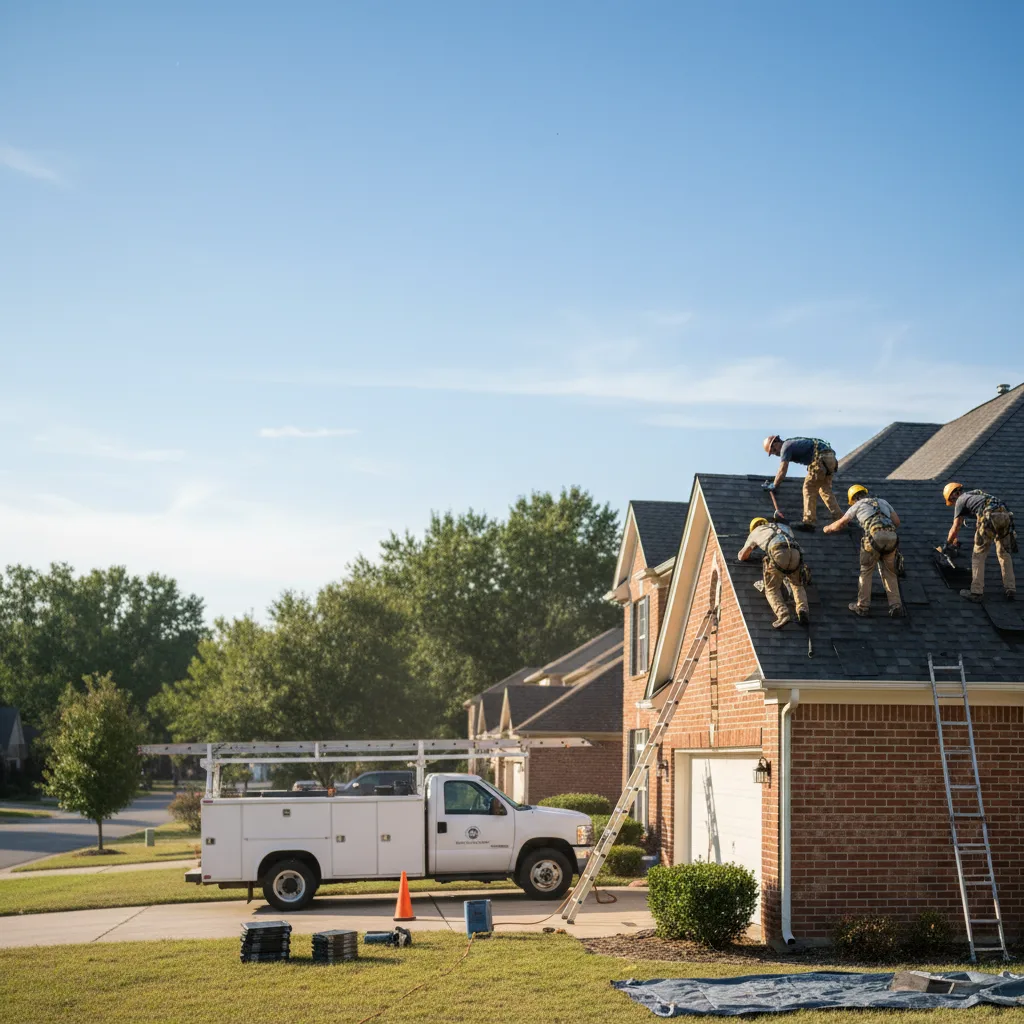
Roof inspections focus on measurable conditions rather than general impressions. Crews check shingle alignment, granule loss, and edge curling. They examine valleys for proper flashing overlap and look for lifted nails or sealant failure around penetrations. Gutters receive attention for sagging that can allow water to back up under eaves. Attic access points are used when available to verify insulation moisture levels and ventilation adequacy. Each area is recorded with photographs and measurements so the report reflects actual field data instead of estimates.
Wind-driven rain often penetrates at ridge vents or improperly sealed pipe boots. Thermal expansion can loosen decking fasteners over time, creating small gaps that worsen during freeze-thaw cycles. Heavy leaf accumulation in valleys accelerates rot when drainage is restricted. Homeowners can note daylight visible through roof boards from inside the attic or soft spots underfoot on upper floors, both of which warrant roof repair before interior damage spreads.
Roof inspections account for the specific environmental setting of each property to identify any resulting wear or damage. Homes throughout the area are built on clay loam.
The patterns of temperature and moisture play a direct role in how roofing materials age and perform. The region experiences hot summers and cold winters, around 15 inches of snow a year, and 108 nights below freezing.
Typical issues in the area include hard water and a long freeze season. Inspectors prioritize checks that match these surroundings to catch problems early.
FAQ

A water mark can appear days or weeks after the actual entry point because moisture travels along rafters or under the decking. The visible spot may be far from the leak origin. An inspection that includes the attic space shows whether active moisture is still present and whether insulation or wood has already been affected.
The price changes with the number of layers that must be removed, whether decking needs replacement, and how many flashings or penetrations are involved. Access to the work area and the type of material required to match the existing roof also affect the total. A single visible defect can turn into a larger scope once the layers are lifted.
Sealant can mask the entry point for a short time but does not correct the reason water found its way in. Temperature swings and wind eventually reopen the path. A proper repair removes the damaged material and restores the layers so the roof sheds water as originally intended.